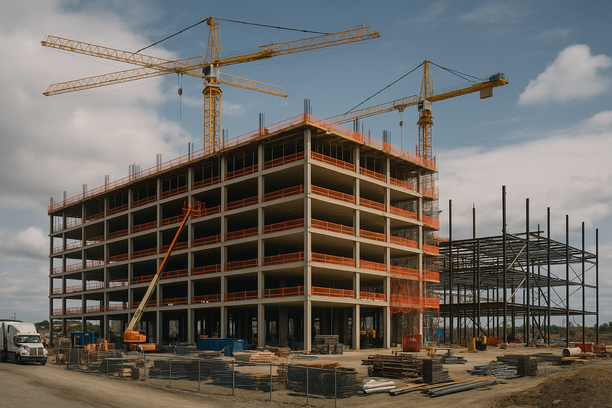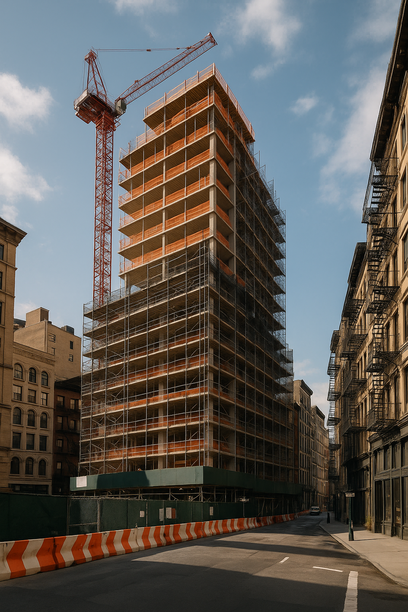
New York City’s office-to-residential market just endured a very public stress test—and came out recalibrated, not retreating. After a structural failure at the former Pfizer headquarters raised alarms across the industry, the City launched a broad inspection sweep of 180 active conversion sites. Inspectors found code violations but, critically, no imminent structural-safety threats. With that reassurance, permitting and project pipelines are moving again: since July, the City has issued initial permits for 16 office-to-residential conversions.
The takeaway: conversions remain central to solving two realities—underutilized offices and persistent housing demand. But the bar for execution is higher. Firms that combine structural competence with disciplined project controls and auditable financials will lead the next wave.
What changed post-Pfizer
– Structural complexity is front and center. Older office buildings feature transfer girders, irregular columns, and legacy MEP systems. Cutting shafts or shifting loads demands rigorous analysis and careful sequencing.
– Citywide inspection restored confidence. By surfacing issues early and confirming no imminent threats, regulators signaled that conversions are viable with proper oversight.
– Documentation and traceability now define risk. Expect deeper scrutiny of approvals, supporting calculations, and alignment between as-builts and design intent.
Signals of a broader reset—not a pause
– 16 new conversion permits since July indicate a ‘safer, smarter’ path, not a moratorium.
– The construction pipeline remains active beyond conversions: new multifamily permits in the Bronx and Queens and major alteration/repositioning work in Manhattan.
– Investment capital is still at work. Transactions like Tishman Speyer’s SoHo office sale to Shorenstein reflect confidence in re-tenanting, upgrading, or converting older assets.
– Along the Hudson waterfront, projects like 300 Port Imperial Boulevard in Weehawken show sustained demand for high-density, transit-oriented mixed use—sharing the same coordination and quality expectations that define conversions.
What this means for mid-sized NYC construction and development firms
1) Expect more front-loaded design and review
– Earlier structural peer review and more iterative coordination.
– Additional preconstruction modeling and value analysis.
– Longer preconstruction timelines with clearer contingencies and decision gates.
2) Build structural and code competence into your team
– Partner with structural engineers experienced in adaptive reuse.
– Train PMs and supers to spot sequencing risks and structural red flags.
– Document every field modification that touches load paths or lateral systems.
3) Treat documentation and cost control as risk management
– Make change orders transparent, justified, and tied to verified scope shifts.
– Separate cost codes for base conversion, safety-driven changes, and owner enhancements.
– Keep RFIs, submittals, models, and as-builts accurate and easily retrievable.
4) Prepare for proof-first lenders and regulators
– Produce detailed cost forecasts with structural contingencies.
– Align reporting with inspections and field progress.
– Maintain a clean audit trail for safety- or structure-related changes.
A practical controls checklist
– Implement a job cost structure that mirrors how the work is built, including committed costs and contingency tracking.
– Link RFIs, submittals, and change orders directly to budget line items and schedule activities.
– Require calculation packages and approver sign-offs for any structural deviation.
– Schedule interim constructability and sequencing reviews with the structural engineer of record.
– Use photo and model-based field verification to confirm as-built conditions before critical path work.
– Standardize closeout deliverables so lenders/owners receive a complete, auditable record.
The bigger picture
Office demand is structurally different post-COVID, while demand for housing near transit and job centers remains elevated. Investors are focused on unlocking value in older assets through repositioning and adaptive reuse. By choosing to inspect, correct, and resume permitting, New York is signaling a long-term commitment to conversions—setting a template other markets may follow.
For 30–100 person GCs and developers, this is an execution game. The winners will be those who combine structural literacy with disciplined project controls and reliable financial systems—whether you run Sage 300 CRE or an equivalent tech stack. In the post-Pfizer era, ‘We don’t just build; we document and protect your asset’ is more than a slogan—it’s a competitive advantage.
Sources: See linked articles for coverage from New York YIMBY, Yahoo Finance Real Estate, The Real Deal, and ConnectCRE.