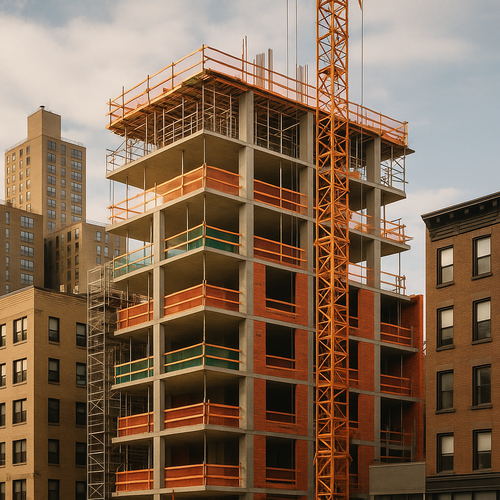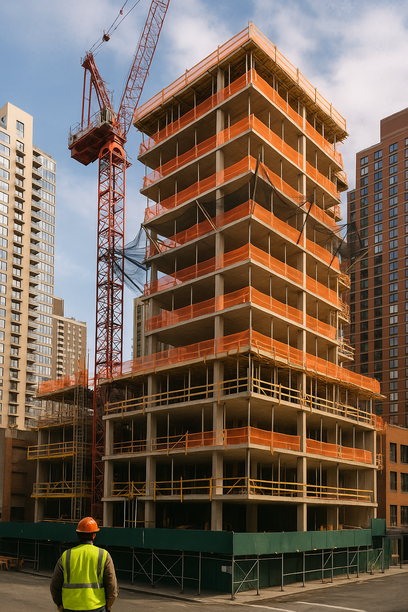
NYC Construction in the Spotlight: Vertical Progress at 70 Hudson Yards
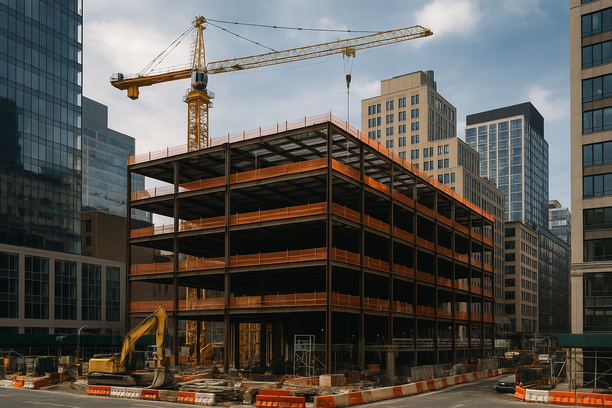
New York City has another landmark moment: vertical construction has begun at 70 Hudson Yards. Beyond another addition to the skyline, this milestone signals market confidence in Manhattan’s commercial real estate while turning up the pressure on execution, coordination, and project controls for contractors—especially those running SAGE 300 CRE.
What’s happening at 70 Hudson Yards
– The project has entered its vertical phase, accelerating visible progress and trade coordination.
– It signals green-lit financing, permits, and stakeholder commitment—capital is betting on Manhattan’s resilience.
– Demand rises for subcontractors, specialty suppliers, and skilled labor.
– Technology and back-office rigor face a real-world stress test: accurate costs, budgets, and change control are non-negotiable.
Why it matters for NYC contractors (30–200 employees)
– Supply chain risks: Competing pulls on steel, concrete, and specialty trades can ripple into delays and cost swings. Real-time data is essential for procurement and schedule pivots.
– Technology arms race: Email-and-spreadsheet workflows can’t keep pace. Field-to-office data flow, BIM coordination, and robust change management inside SAGE 300 CRE are the new baseline.
– Confidence without complacency: Rates, insurance, and regulation still add friction. Scenario planning, cash flow forecasting, and risk visibility inside SAGE 300 CRE separate growth from pain.
– Teaming and trust: A shared source of project truth—auditable cost controls, disciplined documentation, and clean information flow—wins work and protects margin.
What to watch in 2024’s CRE landscape
– Material prices may fluctuate as mega-project demand and global supply shift.
– Labor costs will climb as top crews get absorbed by high-profile jobs.
– Schedule risk intensifies; rapid reforecasting inside SAGE 300 CRE becomes mission-critical.
– The margin race tightens; firms with integrated field and back-office systems will lead.
How contractors can stay a step ahead (Frank’s take)
– Map your data flow: Standardize cost codes, commitments, and change logs from field apps to SAGE 300 CRE.
– Harden procurement: Track POs, delivery dates, subcontracts, retention, and compliance in one system of record.
– Make WIP real-time: Automate percent-complete, forecast-at-complete, and cash projections for weekly decision-making.
– Lock down change orders: Standardize intake, approvals, and pricing; eliminate revenue leakage and billing delays.
– Raise document control: Tie RFIs, submittals, and meeting minutes to budget and schedule for audit-ready traceability.
– Upskill teams: Give PMs, supers, and accounting shared dashboards and clear governance.
– Integrate the stack: Connect BIM and field tools to SAGE 300 CRE via connectors or APIs to cut re-entry and errors.
Bottom line
70 Hudson Yards proves high-velocity construction isn’t slowing down. Winning in this cycle requires connected data, clean workflows, and actionable insights. One focused hour on your project controls could save weeks of rework, delayed billings, and missed change orders.
Ready to make your systems as strong as NYC’s skyline? Let’s talk.
Reference: Urbanize NYC – Construction goes vertical for 70 Hudson Yards: https://nyc.urbanize.city/