
NYC’s Skyline Is Changing Fast — Here’s the Inside Scoop for Construction Leaders
2025 capped a turbulent half-decade with clear signs of a construction comeback in New York City: major towers advancing, a headline hotel sale, and renewed investor appetite. For privately held contractors and specialty subs running 30–200 person teams, the shift brings both upside and new execution risk—especially across payroll, job costing, compliance, and IT.
Project Watch: 520 Fifth Avenue
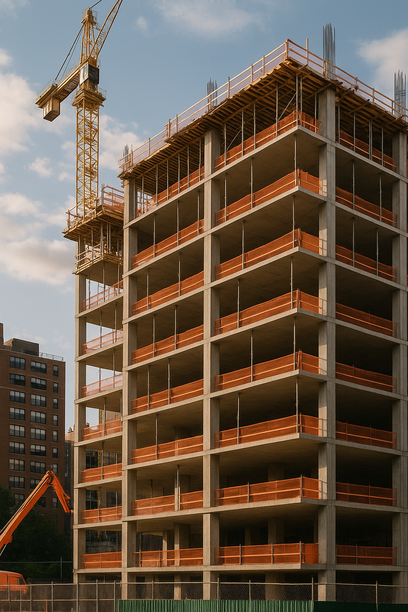
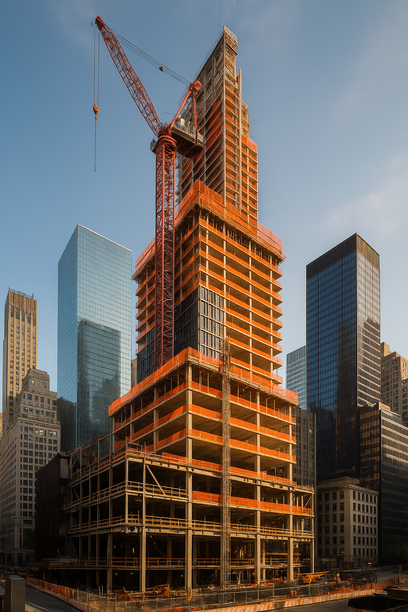
Midtown’s 88-story mixed-use tower at 520 Fifth Avenue (Kohn Pedersen Fox; Rabina) is nearing exterior completion. The project’s momentum signals confidence in top-tier residential and commercial demand—and a wider reactivation of architect, GC, and trade backlogs. Translation: more bids, tighter timelines, and higher coordination demands across labor, subs, and back office.
Project Watch: 262 Fifth Avenue
Meganom’s 860-foot, 52-story residential tower at 262 Fifth Avenue pairs ultra-low unit counts with Passive House-level performance and advanced glazing. Sustainability and envelope performance are no longer just PR—they influence buyer expectations, lender requirements, and, increasingly, code. That means heavier documentation, vendor coordination, and cost tracking that must flow cleanly through Sage 300 CRE.
Market Reality: Activity Up, Labor Tight
The latest DPR readout confirms a robust rebound—particularly in healthcare and commercial—but warns of a worsening skilled labor shortage. Retirements, slower immigration, and talent competition push costs up and schedules out. The bottom-line impact shows up in missed deadlines, rework, and back-office slippage if estimating, billing, and reporting are not airtight.
Commercial Resilience: InterContinental Times Square
The $230M sale of the InterContinental New York Times Square underscores continued global appetite for hospitality assets. For contractors, that often means recurring, phased work: systems upgrades, room and lobby refreshes, and tech integrations—each with heavy compliance and documentation requirements.
What It Means for Construction Leaders
– More activity = more complexity: greater sub coordination, pay apps, and compliance workflows.
– Sustainability is table stakes: documentation and performance proofs are core to winning and closing out work.
– Labor scarcity raises the bar on efficiency and retention.
– IT bottlenecks become project bottlenecks as teams scale across sites.
Action Plan for 2026 (Sage 300 CRE + IT)
1) Standardize cost codes and job structures across all projects to enable dependable forecasting and margin control.
2) Integrate field time and production capture (mobile) directly into Sage 300 CRE to cut manual entry and rework.
3) Automate compliance: certificates, lien waivers, insurance tracking, and subcontractor onboarding.
4) Tighten pay app workflows and change order controls with real-time budget vs. actuals.
5) Strengthen jobsite connectivity (WiFi/LTE), secure file sharing, and remote access so billing and reporting never lag the work.
6) Invest in training and retention: career ladders, foreman enablement, and incentive plans tied to schedule and quality.
Frank’s Take
The firms that win the next cycle will treat Sage 300 CRE and their IT backbone as a competitive weapon—driving visibility, speed, and resilience while labor is scarce and specs grow more demanding.
Want to see how NYC’s best-run teams are using Sage 300 CRE to stay ahead on payroll, billing, and job costing during labor shortages? Let’s connect for a 30-minute readiness review—before the next megaproject leaves you racing to catch up.