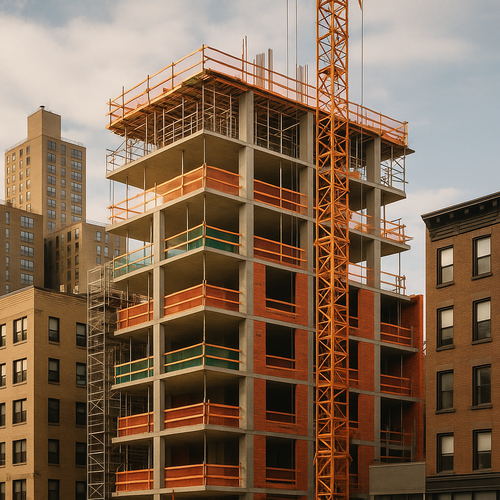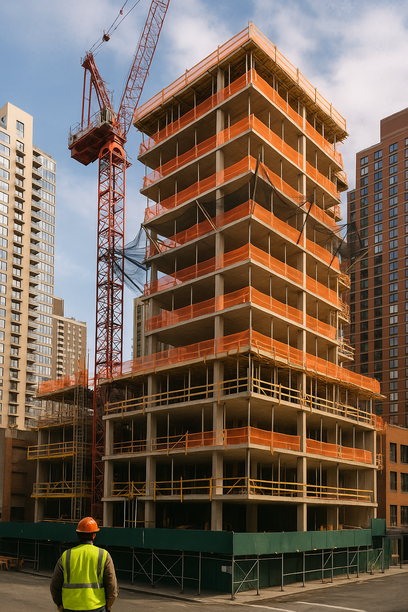
New York City’s commercial landscape is shifting fast. A joint venture led by Broad Street Development and TPG Angelo Gordon has acquired 139 Franklin Street in Tribeca, with plans to convert the ten-story office property into residential units. It’s more than a single transaction—it’s a data point in a citywide wave of office-to-residential (office-to-resi) conversions that’s redrawing neighborhoods and reshaping project pipelines for contractors.
What the 139 Franklin St deal signals
– Adaptive reuse is accelerating: Underutilized offices in prime locations are being repositioned to meet persistent residential demand.
– Luxury expectations: Conversions in Tribeca will favor high-end amenities, infrastructure upgrades, and premium finishes.
– Market pragmatism: Reuse offers a faster, often more cost-effective path to add housing supply than ground-up development.
Why contractors should care now
– Technical complexity: Expect structural reinforcements, sophisticated HVAC, life-safety upgrades, envelope improvements, and energy-code compliance—often within tight urban access constraints.
– Documentation intensity: RFIs, submittals, permits, financing conditions, and sustainability requirements must be tracked with precision.
– Cash flow management: Phased work, progress billing, and frequent change orders make cost control and forecasting essential.
The broader context in NYC
– Hybrid work: Persistent shifts in office utilization reduce demand for traditional floor plates.
– Housing demand: Limited inventory and urban lifestyle preferences keep residential absorption strong, especially in desirable neighborhoods.
– Policy drivers: Streamlined approvals, targeted incentives, and green mandates support conversions that modernize building stock.
Operational readiness with SAGE 300 CRE
For 30–200 employee construction firms, especially those already on SAGE 300 CRE, winning these projects hinges on disciplined process and systems.
– Estimating and precon: Build repeatable takeoff and pricing templates for adaptive reuse scopes—MEP, envelope, egress, and amenity packages.
– Job cost and forecasting: Maintain real-time actuals vs. budget, WIP reporting, and earned value to control margin across phased schedules.
– Change management: Standardize CO initiation, pricing, approvals, and downstream budget revisions to prevent revenue leakage.
– Document control: Centralize RFIs, submittals, drawings, permit logs, and compliance certificates to keep teams and auditors aligned.
– Subcontractor management: Track contracts, lien waivers, insurance expirations, vendor performance, and payables in one system.
– Billing and cash flow: Align AIA-style progress billing with schedule of values, retainage rules, and lender reporting needs.
How to prepare in the next 90 days
– Build a conversions playbook: Define checklists for due diligence, site logistics, safety, and tenant protection plans where applicable.
– Tighten your data backbone: Map RFIs, submittals, and CO workflows in SAGE 300 CRE so nothing slips through the cracks.
– Prequal specialty partners: Line up mechanical, electrical, fire/life-safety, envelope, and commissioning subs with proven urban retrofit experience.
– Sharpen compliance: Update templates for energy code, DOB requirements, and sustainability documentation.
– Strengthen relationships: Stay close to developers, architects, and lenders driving conversion deals to be early on bid lists.
Bottom line
Office-to-resi isn’t a passing trend—it’s NYC’s pragmatic response to evolving work patterns and housing needs. Contractors who combine adaptive reuse expertise with strong project controls and SAGE 300 CRE discipline will be best positioned to capture high-visibility, high-value work as more buildings make the leap from office to home.
Source: https://newyorkyimby.com/type/commercial