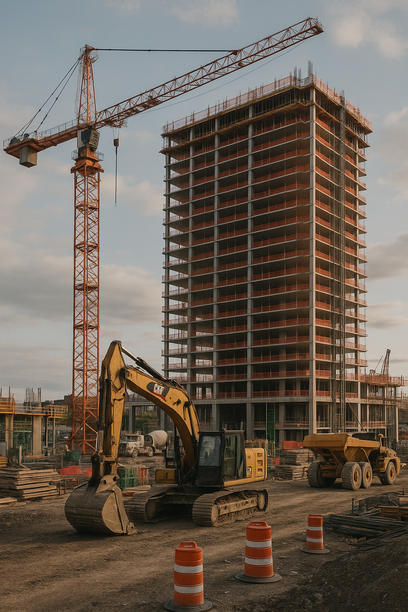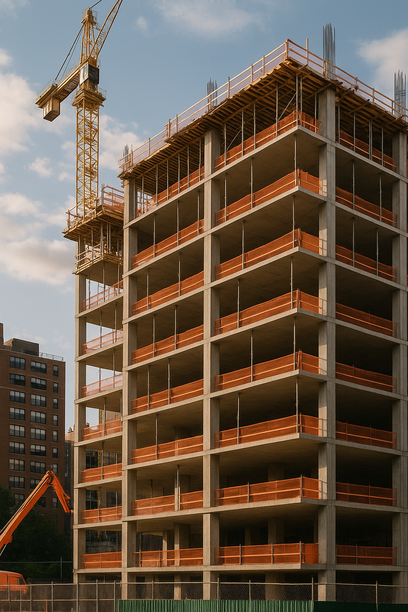
New York City’s FY 2026 September Capital Commitment Plan (Volume 1) is one of the most important documents for anyone in construction, engineering, and real estate development. While it looks like a technical finance report, it is effectively a multi-year implementation roadmap of what the City plans to build, rehab, or repair—from roads and bridges to schools, parks, and public facilities.
Why this matters now
– The plan lays out billions in capital commitments across FY 2026 and the outyears.
– It details construction starts and commitments by agency and project type.
– Headline signal: the City is not pulling back on capital construction despite tighter markets.
In short: NYC is committing to sustained construction volume well into the next decade.
What the Capital Commitment Plan is
Unlike the operating budget (salaries and annual services), the Capital Commitment Plan focuses on long-term physical assets:
– Streets, highways, and bridges
– Public buildings (schools, courthouses, police and fire facilities, libraries)
– Water and sewer systems
– Parks and waterfronts
– Housing and economic development projects
– Technology and resiliency infrastructure
Each line item represents anticipated commitments—funds the City expects to enter into contracts for—over a multi-year window. It shows when the City intends to authorize construction, not just budget authority, and breaks down starts and totals by fiscal year. Historically high execution rates (e.g., ~86%) indicate these plans convert into real RFPs, bids, and awards.
Bigger context: strong, if constrained, construction climate
– Major infrastructure is ramping up: BQE Central rehabilitation (~$4B) and Amtrak’s Sunnyside Yard upgrades ($1B+).
– Market sentiment is cautious but positive: firms are selective yet expect healthy revenue.
– Regional data: construction activity remains strong across the NYC metro area, especially in commercial development.
Taken together, public and quasi-public work—city infrastructure, rail, transportation, civic facilities—will anchor NYC’s construction pipeline even as private development cycles ebb and flow.
How the plan translates to real work
1) Volume of starts
– 1,460 total construction starts across the time horizon
– High execution rate (86%)
– Diversified pipeline across agencies and project types
Implication: bid calendars remain busy, with a mix of new builds, rehabs, and system upgrades. Competition will be intense—but so will opportunity.
2) Resiliency and state of good repair
– Emphasis on core repairs to roads, bridges, schools, and public housing
– Climate resilience and flood protection, especially in waterfront and low-lying areas
– Modernization of aging facilities and MEP upgrades
These categories are less cyclical and often driven by mandates and safety, offering stability even when private projects slow.
3) Multi-year visibility
The plan offers a rough horizon for demand by sector and geography, clues on which agencies will be most active, and guidance for aligning staffing, prequalification, and JV strategies. If school construction ramps, for example, review SCA prequalifications, estimating capacity, subcontractor lineup, and agency-specific compliance.
Why this is pivotal for mid-sized NYC contractors
Constraints
– A crowded public-works pipeline plus mega-projects tighten labor, materials, and specialty subs.
– City work is compliance-heavy and schedule-sensitive; weak controls can erase margins.
Opportunities
– Potential to lock in multi-year backlog tied to public funding
– Diversification across agencies and sectors
Operational discipline—project controls, financial systems, documentation—becomes a competitive edge. Many firms rely on construction-specific systems (e.g., Sage 300 CRE with tight integrations) to manage job costs, bids, compliance, and cash flow at scale.
How to use the plan strategically
1) Map it against your sweet spot
– Identify the agencies and project types where you win (DDC vertical, DEP infrastructure, DOT roadways, SCA schools, Parks, etc.).
– Note borough-level concentrations.
– Build an internal forecast: target share of backlog from City work; priority prequals; outreach and teaming.
2) Tune the back office before the wave hits
– Clean up job cost structures and cost codes for City reporting.
– Integrate estimating, PM, and accounting so awards flow cleanly into live jobs.
– Standardize documentation (submittals, RFIs, change orders, certified payroll, lien waivers) to agency norms.
3) Lock in cash flow discipline
– Anticipate retainage and slower pay cycles.
– Submit complete, accurate billing packages to avoid delays.
– Track WIP and over/under billing; watch early warning signs when labor or materials outpace budget.
Bottom line
The FY 2026 Capital Commitment Plan confirms a durable public construction cycle in NYC. Work is there, competition will be fierce, and operational discipline—from estimating through field reporting and accounting—will separate consistent winners from the rest. For firms prepared to scale their controls and compliance, this capital wave can power growth through 2030.
Reference
NYC OMB – FY 2026 September Capital Commitment Plan (Volume 1): https://www.nyc.gov/assets/omb/downloads/pdf/ccp/fy26/ccp-09-25a.pdf
Additional sources: New York Build Expo Industry News; New York Business Journal; Federal Reserve Beige Book (New York District).