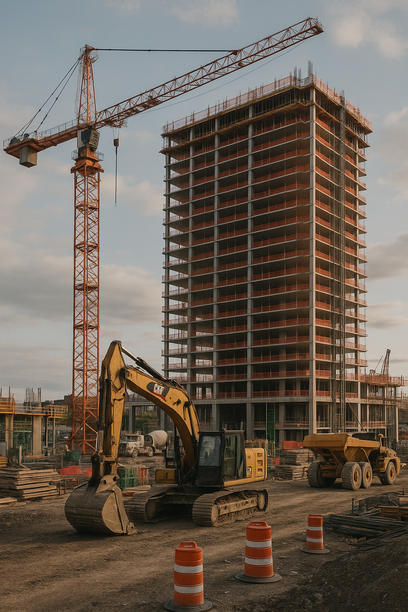

On September 16, 2026, The Real Deal reported that Tishman Speyer filed plans for a 38‑story, approximately 1,000,000‑square‑foot commercial tower at 99 Hudson Boulevard in Hudson Yards (NYC DOB Job No. 1007080001). It is currently the largest new building application on NYC’s construction permit list and a clear signal about where high‑stakes development is heading.
The news at a glance:
– Developer: Tishman Speyer
– Location: 99 Hudson Boulevard, Hudson Yards, Manhattan
– Scale: 38 stories; about 1M sq. ft.; Class A commercial/mixed commercial focus
– Status: New building application filed; top of NYC’s mid‑September 2026 permit list
Why Hudson Yards still works for mega‑projects:
– Transit and infrastructure: 7 train extension, proximity to Penn Station and Moynihan, plus west side infrastructure investments.
– Amenity arms race: Trophy‑level amenities, terraces, wellness, and flexible floor plates that support hybrid work.
– Flight to quality: Demand concentrates in efficient, sustainable, tech‑ready buildings with tenant‑friendly build‑outs.
What this permit says about NYC’s construction pipeline:
– Large commercial is not dead; it is concentrating in strategic submarkets at high quality.
– Complexity rises: structural, MEP, façade, interiors, technology, life‑safety, and tighter DOB oversight.
– Permits lead work: Applications today drive design, precon, and early site work in the next 12–24 months, with full construction to follow.
Market ripple effects to watch:
– Labor and scheduling: Major demand for specialty trades, supers, and PMs tightens availability, impacts wages, and compresses schedules elsewhere.
– Materials and supply chain: Steel, concrete, curtain wall, elevators, and high‑efficiency MEP gear create long‑lead and pricing pressure.
– Financing and risk: Complex draws, TI allowances, and change orders increase the premium on disciplined cost control and reporting.
Why this matters to NYC contractors using Sage 300 CRE:
– Predictable cash flow: Keep budgets aligned with reality. Strengthen forecasting and WIP so cost overruns don’t surprise you.
– Compliance and documentation: Safety, insurance, certified payroll, OCIP/CCIP, and lien waivers demand clean, trackable workflows.
– Field‑finance integration: Change orders, time, production, and procurement updates must land in Sage 300 CRE fast enough to guide weekly decisions.
Actionable next steps:
– Tighten job cost controls and WIP reporting; reconcile commitments and change orders weekly.
– Standardize change order workflows from field approval to Sage entry; reduce lag and rework.
– Lock long‑lead procurement early and track submittals, POs, and deliveries against cost codes.
– Forecast labor by trade and project; align schedules to avoid overtime spikes and resource conflicts.
– Integrate field tools (e.g., Procore) with Sage 300 CRE for near real‑time cost, budget, and production data.
– Produce lender‑ready reports without manual crunching; maintain audit trails for DOB and financing partners.
Bottom line: Tishman Speyer’s 1M‑sq‑ft move at 99 Hudson Boulevard underscores that Class A commercial is very much alive in New York City. The firms that win will pair quality execution in the field with tight project controls and clean financial systems.
Reference: The Real Deal, “NYC’s top construction permits: Tishman files plans for 1M sq. ft. Hudson Yards tower,” 9/16/2026 — https://therealdeal.com/data/new-york/2026/new-york-citys-top-construction-permits-sept-15-2026/