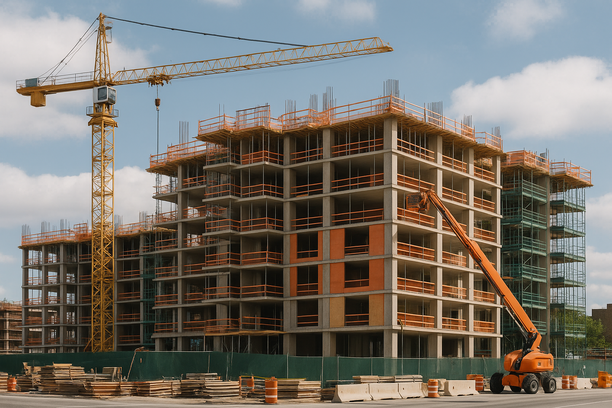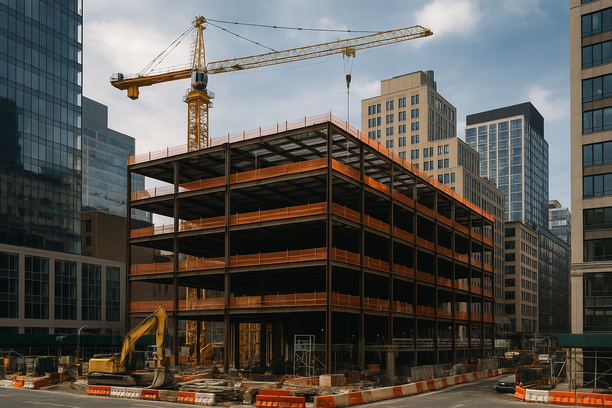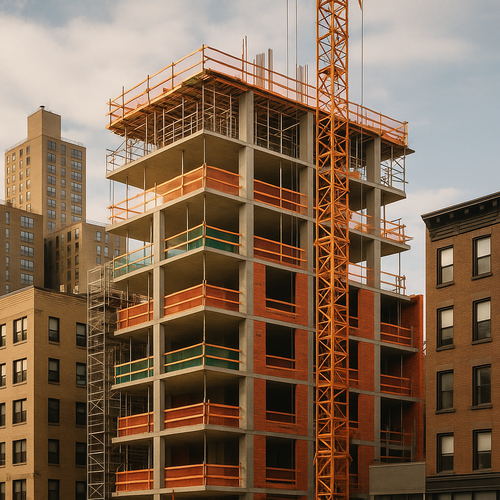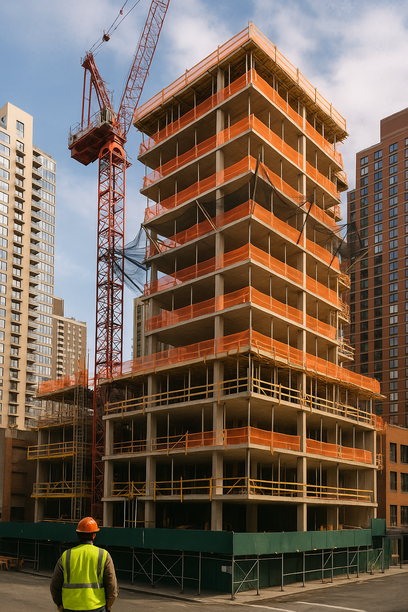

A classic six-story warehouse in Manhattan’s West Chelsea Arts District is being redeveloped by Jamison Commercial RE and Cahn Family Associates into a boutique office. The project preserves architectural character while delivering modern building systems and right-sized, premium space. It exemplifies NYC’s broader CRE reset: adaptive reuse, capital reallocation, and targeted bets on differentiated product.
Market signals across NYC and the Tri-State underscore this shift:
– Long Island City: a vacant commercial property sold for $6.1M for high-end condo conversion.
– The Bronx: Rubin Equities is advancing permits for 77 units in an 11-story mixed-use building at 1350 Inwood Avenue.
– Hudson Yards: Tishman filed plans for a 38-story, 1M SF commercial tower at 99 Hudson Boulevard.
– Midtown: George Comfort & Sons closed a $386M refinancing at 200 Madison Avenue, supported by a major Havas Health lease extension and expansion.
Why West Chelsea’s conversion matters
– Preserve character: exposed brick, tall ceilings, and original columns command a premium from creative tenants.
– Upgrade systems: modern HVAC, life safety, IT, and accessibility are now table stakes.
– Deliver right-sized product: boutique offices offer premium experience without the anonymity of mega-towers.
The result is a compelling value proposition for tenants and a path to stronger rents and occupancy for owners without ground-up risk.
Adaptive reuse vs. ground-up development
– Flexibility: older assets can pivot to office, residential, or mixed-use where zoning allows.
– Portfolio strategy: owners are repositioning across multiple assets, not just one-offs.
– Submarket fit: West Chelsea favors creative office; LIC supports condo plays; parts of the Bronx lean mixed-use.
This Chelsea project keeps commercial use in a prime submarket while tailoring to post-pandemic demand for differentiated, smaller-footprint, higher-quality space.
Evidence of confidence: Hudson Yards and Midtown
– Tishman’s 1M SF tower filing signals durable demand for top-tier, amenitized office.
– 200 Madison’s $386M refinancing shows lenders back well-leased, well-located assets with credible business plans.
Capital and leasing are concentrating in two lanes: future-proofed trophy assets and unique, character-rich alternatives. The redeveloped warehouse wins on identity and experience.
Implications for NYC and Tri-State stakeholders
Owners and investors
– Standing still is the riskiest strategy.
– Evaluate underperforming assets for repositioning: boutique office, residential, mixed-use, or specialty use where feasible.
– Align capex and financing with tenant commitments; structure matters as much as design.
Developers and construction firms
– Adaptive reuse is complex: hidden structural, MEP, and code issues are common.
– Tenants expect digital infrastructure, robust HVAC, and sustainability features in vintage buildings.
– Project controls are critical: cost vs. budget, change orders, subcontractor commitments, cash flow, and lender reporting must be disciplined. Teams running systems like Sage 300 CRE should harden workflows for discovery-heavy renovations.
Why boutique offices and repositioned assets will endure
– Hybrid work: smaller footprints, better experiences.
– Talent and brand: authentic buildings help recruit and retain.
– Capital discipline: investors prefer differentiated, high-conviction strategies over commodity space.
– Policy tailwinds: growing support for adaptive reuse and mixed-use density.
How to capitalize now
– Audit your portfolio or pipeline for structurally sound but functionally obsolete assets.
– Match each project to submarket demand rather than national narratives.
– Elevate financial and operational controls to protect margins on complex jobs.
– Tell the building’s story: from industrial backbone to creative hub.
Final takeaway
West Chelsea’s warehouse-to-boutique office is a signal, not an outlier. Expect fewer default office plays and more targeted, adaptive reuse and mixed-use strategies. Competitive advantage is shifting toward design, character, tenant experience, and rigorous execution. Those who adapt, invest wisely, and manage with discipline will define the next chapter of New York commercial real estate.