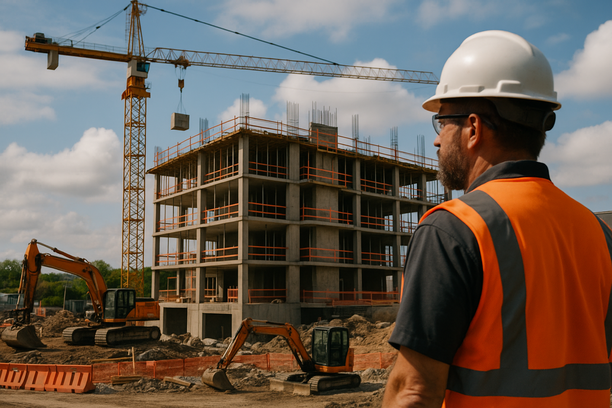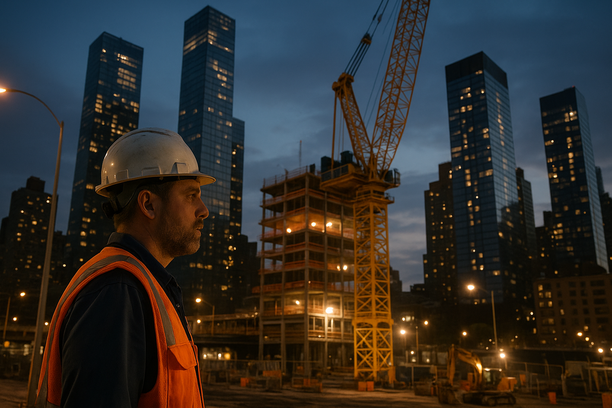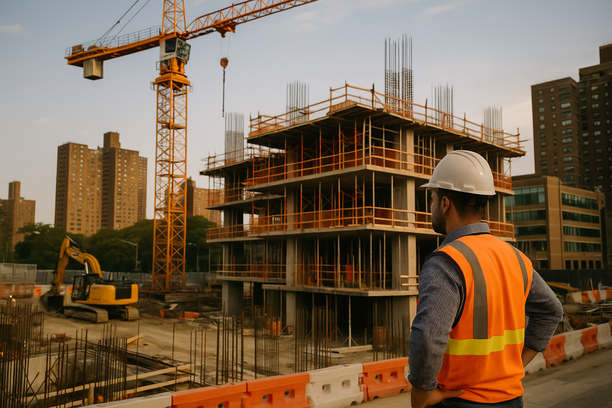
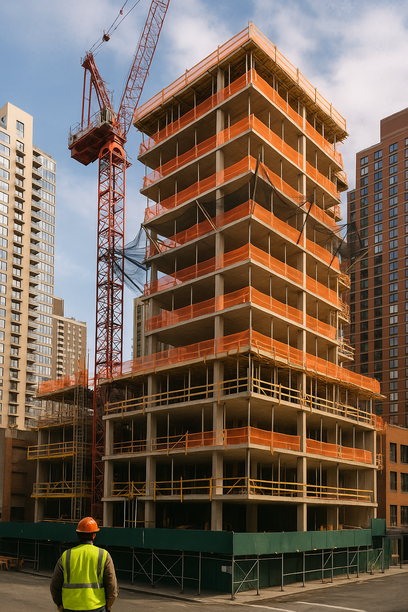
New York YIMBY’s latest updates confirm what many in the field already feel: mixed-use development is accelerating across the city, from the Bronx to Greenwich Village to Queens Boulevard. Recent movement on a seven-story at 3301 White Plains Road, a ten-story at 86 University Place, and fresh renderings for 64-11 Queens Boulevard point to a market that is dense, transit-oriented, and operationally demanding.
3301 White Plains Road, Williamsbridge, The Bronx
White Plains Road is a core commercial spine with 2 and 5 train access. A new seven-story mixed-use building here typically stacks active ground-floor retail with modern residential above. Beyond added units, it signals confidence in neighborhood demand, steady densification around transit, and the gradual replacement of older single-story retail with vertical mixed-use. For contractors and subs, this is repeatable, mid-scale work where sharp estimating, labor tracking, and tight cost control can quietly add points to margin.
86 University Place, Greenwich Village, Manhattan
In one of NYC’s most constrained and scrutinized environments, a ten-story mixed-use project suggests premium residential (or institution-adjacent units), destination ground-floor space, and a high bar for design and entitlements. Construction here is high-stakes: limited laydown areas, strict noise and logistics windows, exacting neighbors, and complex approvals. Profitability depends on airtight planning, subcontractor coordination, schedule discipline, and accurate, real-time job cost reporting and forecasting.
64-11 Queens Boulevard, Queens
New renderings are more than marketing—they indicate design and financing maturity and help catalyze preleasing and community engagement. Along Queens Boulevard’s wide, historically auto-oriented corridor, the visuals often preview active ground floors, amenity-rich residential components, and better pedestrian connections. Expect multi-phase construction, complex MEP and vertical transportation, and a long tail of tenant fit-outs and building operations. Once one ambitious project stabilizes, nearby sites frequently reprice and queue up for redevelopment.
Why This Matters for Builders, Developers, and Operators
– Mixed-use remains NYC’s default growth model, especially near transit.
– All boroughs are in play, with location-specific constraints and opportunities.
– Execution risk is rising: denser sites, stricter codes, and more demanding stakeholders.
– Financial and operational systems are now competitive weapons, not back-office chores.
Your Playbook to Turn Permits into Profits
– Convert conceptuals to hard estimates fast and keep takeoffs current.
– Enforce rigorous change-order control and subcontractor coordination.
– Maintain clean, timely job cost data and cash-flow forecasts (Sage 300 CRE or similar).
– Align procurement with realistic lead times; lock critical-path items early.
– Integrate field updates with back-office systems for one source of truth.
– Keep lenders confident with accurate, transparent reporting and draw packages.
Read YIMBY as a Forward Indicator
Monitor headlines like “Permits filed…” and “New renderings revealed…” to spot which corridors are heating up, what lenders will back, and where demand for trades and materials is headed. Use that signal to shape pipeline, staffing, and procurement before the RFP drops.
Bottom Line
NYC’s mixed-use resurgence is real and broad-based. You can’t control where the next permit lands, but you can control readiness. With disciplined estimating, change-order governance, integrated field-to-finance data, and clear forecasting, each new YIMBY headline becomes your next well-managed, margin-protected project.
Source: New York YIMBY (https://newyorkyimby.com/)