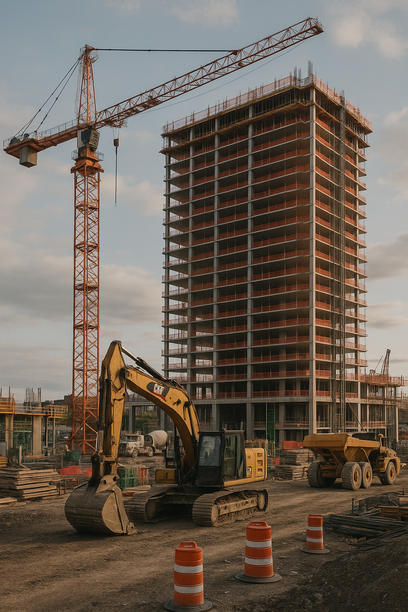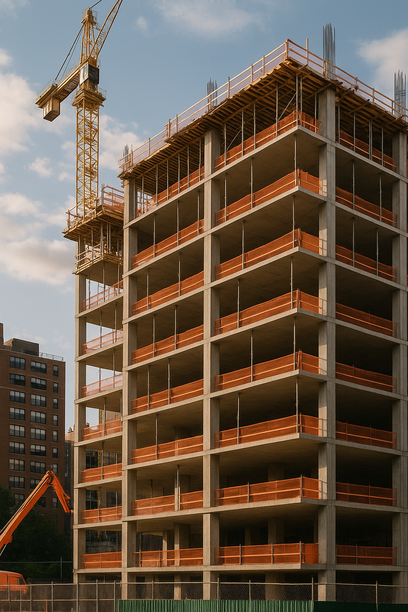
New York City is tightening its building code this December to curb construction fatalities and serious incidents. The big change: any project 7 stories or taller will now be treated as a “major building.” That designation brings stricter oversight, a mandatory Site Safety Plan (SSP), and a dedicated on-site safety coordinator.
What changed and why it matters
– Threshold lowered from 10 stories to 7 stories, sweeping hundreds of additional jobs into major-building oversight.
– Mandatory SSP approval by the NYC Department of Buildings (DOB) before work starts.
– A qualified safety coordinator must be present on-site with authority to halt unsafe work.
– Expanded documentation, training, and controls designed to reduce injuries and fatalities across mid-rise and high-rise projects.
Who is most affected
– Mid-sized contractors (roughly 30–200 employees) delivering residential and mixed-use mid-rise work now face skyscraper-level compliance expectations.
– Firms relying on manual paperwork or minimal safety processes will feel the steepest learning curve.
Operational impacts you should expect
– Cost and schedule: Building and maintaining a compliant SSP and staffing a safety coordinator increase overhead and can affect timelines.
– Bid competitiveness: Contractors already operating above minimum compliance will gain an edge; laggards risk penalties or disqualification.
– Recordkeeping: Real-time, audit-ready documentation becomes essential. Digitized workflows reduce scramble and exposure when inspectors arrive.
How to prepare now
– Audit current practices against SSP requirements and close gaps.
– Budget for a full-time or dedicated on-site safety coordinator.
– Train project managers, supers, and foremen on updated DOB requirements.
– Digitize compliance: Configure SAGE 300 CRE to automate logs, reporting, incident tracking, and audit trails.
– Communicate upstream: Align owners, lenders, and design teams on added costs, schedule impacts, and documentation standards.
The bottom line
Safety has moved from a back-office checklist to a front-line business driver. With the 7-story threshold, NYC is raising the bar on consistency and accountability across a much larger share of projects. Contractors that invest in robust SSPs, training, and digital recordkeeping will not only reduce incidents but also strengthen their bids, client trust, and insurer confidence.
Ready to turn compliance into a competitive advantage? Let’s talk about how SAGE 300 CRE and connected workflows can streamline your next SSP and inspection cycle—helping keep New York City jobsites safer for everyone.
Source: AICI Industry News (https://aiciny.org/news/)